
Sumatra reels as deadly floods and landslides devastate communities
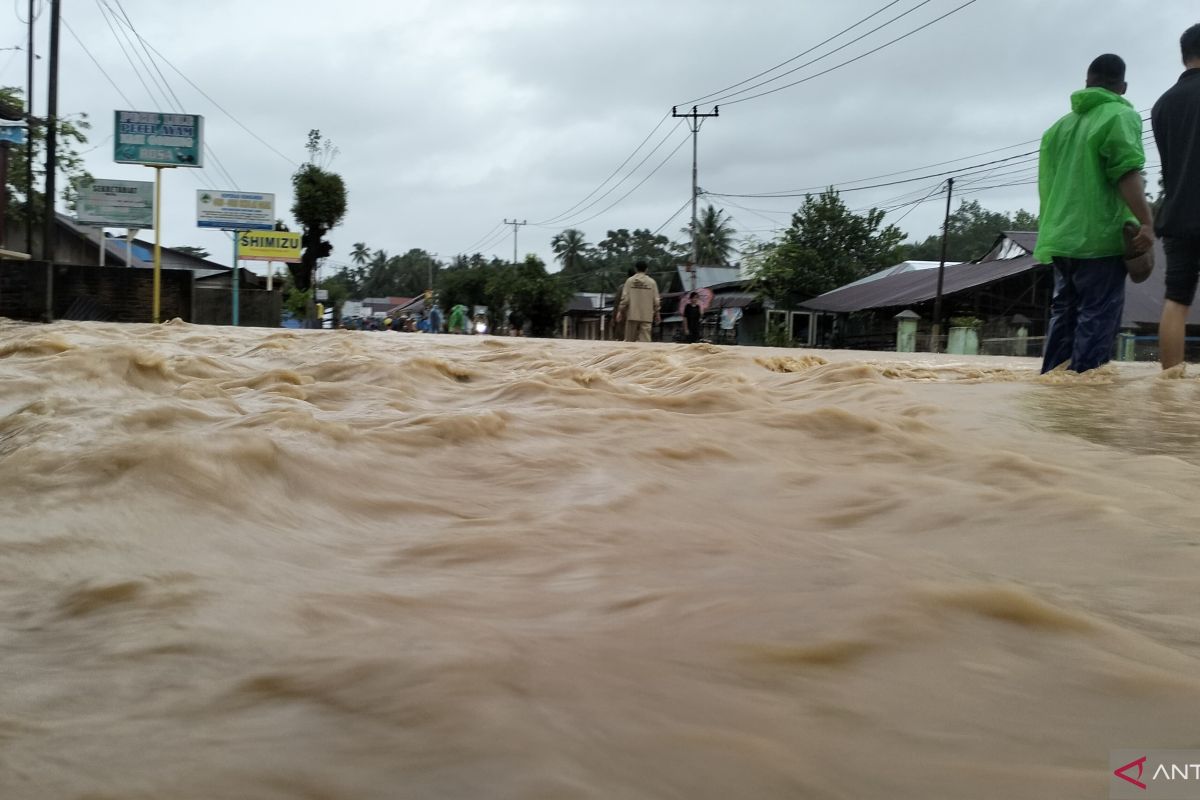
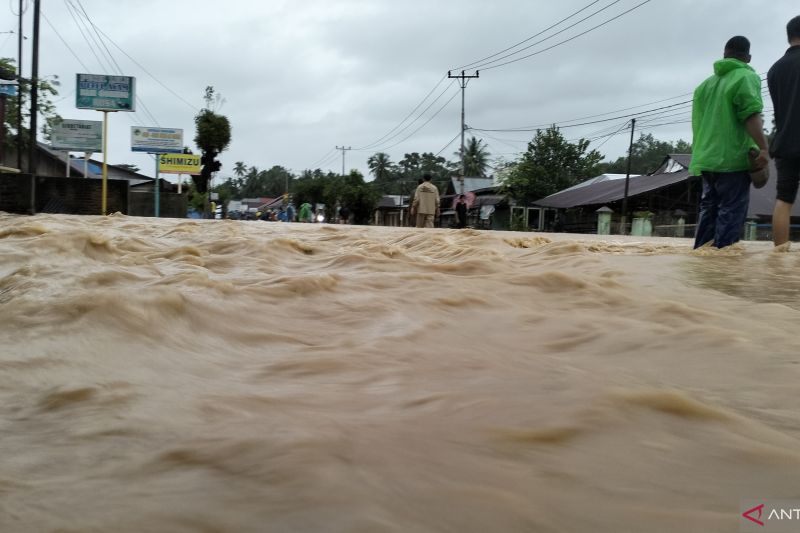
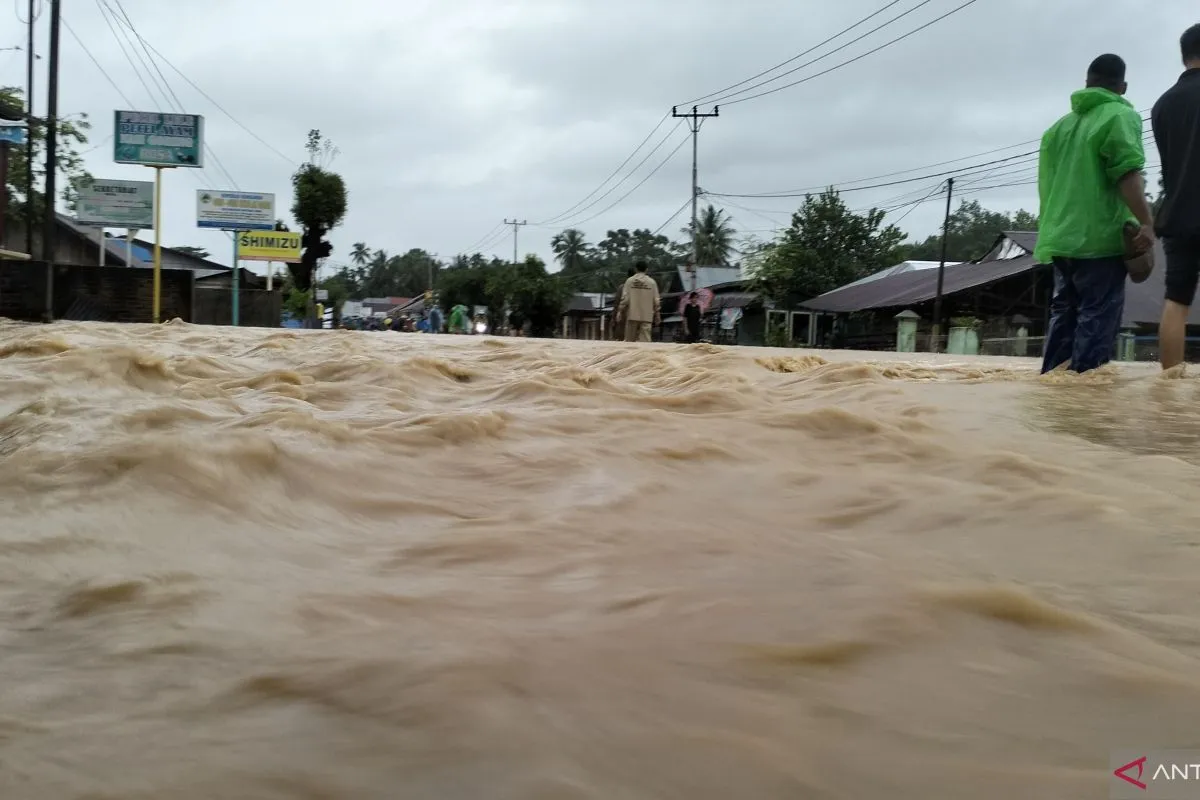
Palembang (ANTARA) - Indonesia awoke this week to scenes of devastation across Sumatra, where days of relentless rain triggered floods and landslides that killed residents, displaced tens of thousands, and forced entire districts into states of emergency.
In Aceh Province, authorities declared disaster status in 10 of its 23 districts and cities as rising waters forced 1,497 people to flee their homes by Wednesday afternoon. Two residents were confirmed dead.
Aceh’s Disaster Management Agency reported that floods and landslides swept through the province between November 18 and 26, inundating wide areas and damaging essential infrastructure.
"Some 14,235 households, or 46,893 people, have been affected, and 1,497 individuals from 455 households are currently displaced," said acting agency chief Fadmi Ridwan in Banda Aceh.
Officials attributed the destruction to continuous heavy rainfall, strong winds, and unstable geological conditions that together fueled flooding, soil movement, and landslides across vulnerable mountain and coastal regions.
The 10 flooded areas include Bireuen, Lhokseumawe, Langsa, East Aceh, Bener Meriah, Gayo Lues, Aceh Singkil, North Aceh, Aceh Tamiang, and South Aceh, with water depths reaching 30 to 80 centimeters in many neighborhoods.
Among the casualties was 27-year-old M. Afdalil of North Aceh’s Tanah Jambo Aye District, who drowned after being swept away by floodwaters near a rice-field path.
The crisis extended beyond Aceh. Flash floods and landslides also battered large parts of North Sumatra and West Sumatra, overwhelming local governments and stretching emergency response teams.
Indonesia’s National Search and Rescue Agency (Basarnas) said Central Tapanuli District suffered some of the heaviest damage, with disaster zones recorded in Badiri, Pinangsori, Lumut, Sarudik, Tukka, Pandan, Sibabangun, Tapian Nauli, and Kolang.
By Wednesday night, at least 1,902 families had been affected in Central Tapanuli, including 1,261 families in Kolang alone.
Four family members there were found dead after being buried in a landslide.
In South Tapanuli, flash floods and landslides struck Aek Ngadol, Hutagodang, Garoga, Batuhoring, and Hapesong Baru in Batang Toru District.
Six residents were killed by floods, and seven others were injured in a landslide in Parsariran.
Meanwhile, the coastal city of Sibolga reported some of the most severe losses.
Eight people were confirmed dead and 21 were missing as of Wednesday night, according to local SAR posts monitoring the worsening situation.
To shelter displaced families, the Nias SAR Office opened evacuation sites at Pandan Sports Hall in Central Tapanuli, SMPN 5 Parombunan in Sibolga, Bhayangkara Hospital in Batang Toru, and several village centers in South Tapanuli.
Basarnas said joint search-and-rescue teams—including military units, police, disaster agencies, water police, and community volunteers—were mobilized to expand searches and provide emergency relief.
Facing mounting fatalities, the Indonesian government convened an inter-ministerial emergency meeting on Thursday to coordinate rapid response measures for the growing hydrometeorological disaster across Sumatra.
In hard-hit Padang, West Sumatra, and Sibolga, North Sumatra, the Indonesian Armed Forces deployed personnel to evacuate trapped residents and support medical operations in flooded districts.
The Navy’s Western Fleet Command dispatched units to assist evacuations in Padang, where several neighborhoods were submerged after days of extreme rainfall, according to Fleet Commander Vice Admiral Denih Hendrata.
He said rubber boats and rescue equipment were deployed to reach residents stranded in rapidly rising waters, particularly in isolated pockets of the city where access roads were cut off.
One of the hardest-hit locations was Rantau Panjang Village in Sasak Subdistrict, West Pasaman District, where Navy territorial units rescued 40 residents stranded by deep floodwaters.
All 40 evacuees were transferred to medical teams for urgent treatment before being moved to the Sasak Fish Auction Hall for further health checks and then to the Talao Pagang evacuation post.
Denih said Army personnel, regional officials, and the local disaster management agency assisted throughout the evacuation efforts, enabling faster movement through dangerous terrain and obstructed routes.
In Sibolga, the military expanded its presence. Major General Freddy Ardianzah, chief of the Armed Forces Information Center, said 555 TNI personnel were deployed to support evacuations and search operations.
He said troops were focused on three missions: rescuing trapped residents, locating missing individuals, and clearing landslide debris blocking critical access roads needed for aid delivery.
Evacuated residents were transported to military health posts for treatment, while temporary field kitchens were set up to distribute food and warm meals to flood survivors.
“TNI has deployed five doctors and 31 nurses to provide direct medical support,” Freddy said.
He added that search efforts involved close cooperation between the military, local authorities, and regional disaster agencies to improve speed and accuracy in locating missing residents.
To reopen strategic routes, the military dispatched engineering units equipped with excavators, dump trucks, ambulances, inflatable boats, tents, folding beds, and field-kitchen equipment.
Freddy said the Armed Forces would remain on site until conditions stabilized and communities began transitioning from emergency response to recovery.
Pewarta: Rahmad Nasution
Editor: Dolly Rosana
COPYRIGHT © ANTARA 2026


